
 FI
FI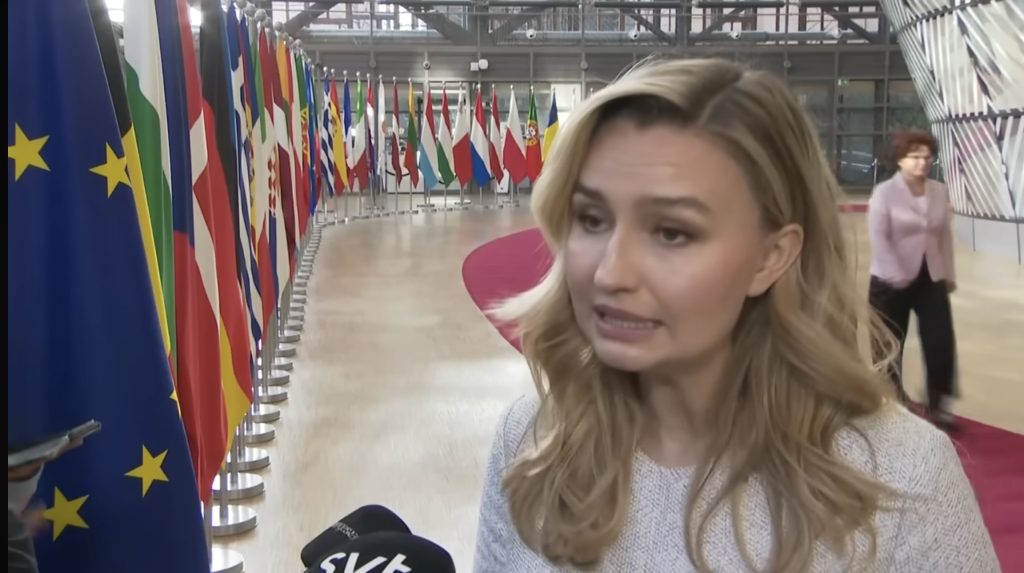
The war in Iran has sent shockwaves through Europe’s energy markets. The debate is no longer about climate targets or regulatory detail. It is now explicitly about energy security, investment flows, and where the next industrial wave will be built.
The escalation in the Gulf has exposed, once again, the risks of a global energy system still dependent on fossil fuels from unstable regions. Qatar’s LNG production has been hit by strikes, with impacts expected to last for years. At the same time, the Strait of Hormuz has re-emerged as a geopolitical choke point. This is feeding directly into Europe, through gas and electricity prices and rising investment risk premiums.
The UK’s parliamentary research service noted in its analysis that the Middle East crisis has already pushed up wholesale gas and electricity prices in Europe, particularly in markets where electricity is tied to gas.
“Wholesale gas and electricity prices have increased again following instability in the Middle East,” the House of Commons Library stated in a spring 2026 report.
This is rapidly reshaping the landscape. In Central Europe and the UK, energy prices increasingly track geopolitical risk. In the Nordics, they are still largely determined by the production structure.
Sweden and Finland warn: investment credibility is at stake
The political message from the Nordics has hardened. Sweden’s Energy Minister Ebba Busch was unusually direct at the EU Energy Council in Brussels:
“We have done our homework… Sweden is the largest per capita net exporter of clean electricity in the EU, and still we risk ending up as losers,” Busch said in March 2026.
She went further:
“If this continues, we will have to reconsider our position in the energy union.”
The message was aimed squarely at the internal EU debate over weakening green fuel regulation. Sweden has invested early in clean electricity and hydrogen. If the rules are softened, the logic of those investments collapses.
Finland’s tone has been more measured, but the substance is aligned.
“A strong and predictable EU emissions trading system secures investments and competitiveness,” said Finland’s Minister of Climate and Environment Sari Multala at an EU meeting in March 2026.
At the same time, the Finnish government directly linked the Middle East crisis to energy policy:
“The situation highlights the importance of reducing dependence on fossil fuels from unstable regions.”
Energy and climate policy have now moved firmly into the core of security policy.
The EU is testing the credibility of its own market
The European Commission has already created a demand framework for green fuels. ReFuelEU Aviation requires airlines to begin using sustainable fuels at 2% from 2025, rising to 6% by 2030. FuelEU Maritime forces a gradual reduction in the emissions intensity of marine fuels.
These have been strong market signals from the EU. They have already driven hundreds of investments in dual-fuel ship engines capable of using both fossil and cleaner fuels. China, meanwhile, is rapidly investing in a new generation of cleaner shipping.
Yet at the same time, pressure to dilute regulation is growing inside the EU. Airlines are citing cost and competitiveness concerns. The International Air Transport Association has called for a review of the EU emissions trading system.
On the other side of the debate, Transport & Environment warns bluntly:
“Europe must not let airlines sabotage clean aviation fuels,” the organisation said in its statement.
Technical reality reinforces the tension. The European Union Aviation Safety Agency concluded in its latest report:
“The 6% SAF target by 2030 may be achievable, but synthetic fuels remain significantly behind,” EASA stated in its 2025 technical report.
The EU has created the market, but it has yet to clearly demonstrate that it will politically stand behind it.
A 1970s-style shock, with different technology
The current situation is increasingly compared to the oil crisis of the 1970s. Then, the shock forced Western economies to build new energy systems. North Sea oil became a strategic asset. The UK and Norway secured domestic oil and gas supply. In the United States, the foundations were laid for the later shale boom.
The same dynamic is now underway, but with different technology. The focus is no longer only on fossil fuels, but on hydrogen, e-fuels, biomethanol, and zero-carbon electricity. According to the European Commission, sustainable aviation fuel alone will require dozens of new plants and hundreds of billions of euros in investment over the coming decades.
Finland stands to benefit if the policy holds
Finland’s position in this transition is unusually strong. Its electricity production is close to zero-carbon, its energy system is stable, power prices are relatively competitive, and investment plans are extensive.
According to the Finnish government, green transition investment projects in Finland could reach as much as €300 billion. Finland has also been advancing hydrogen cooperation with Germany and has opened support programmes for carbon capture and renewable fuels.
This creates a foundation for new export industries, including biomethanol, where demand is rising in both aviation and maritime sectors.
At the same time, the investment logic is shifting in another sector: data centres. Electricity price has become a central competitive factor. Gas-dependent economies such as Germany and the UK are losing attractiveness in this segment, while countries with stable and cleaner power systems are gaining ground.
The decision will be made in Brussels
The EU now faces a clear choice. If it weakens environmental energy regulation, it undermines investment predictability. If it holds its course, it can leverage the geopolitical situation.
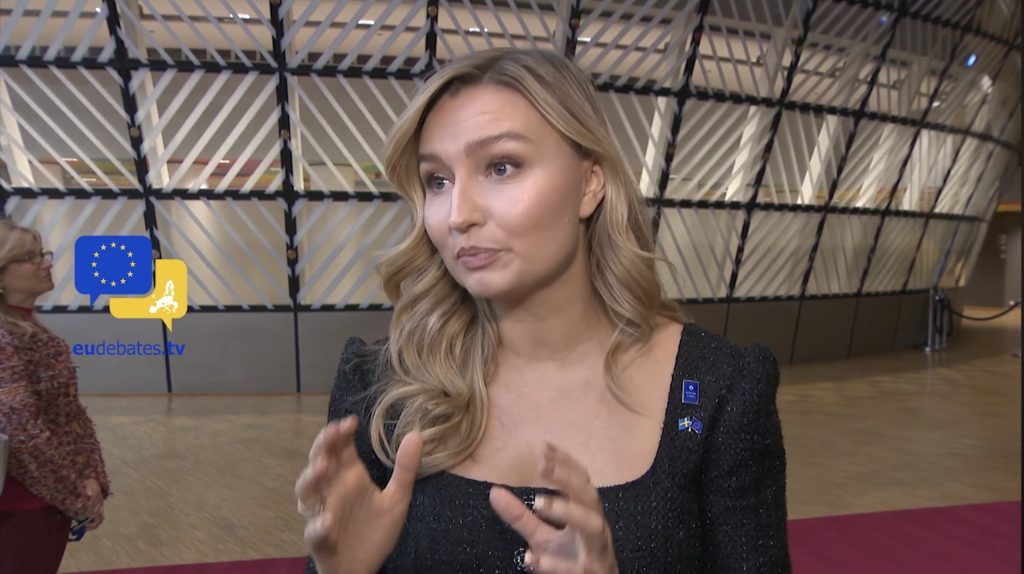
“We have done our homework… and we will not accept being penalised for that,” Ebba Busch said in Brussels.
Read More:
- Government Offices of Sweden: Statement by Minister Ebba Busch at the Energy Council meeting in Brussels
- Valtioneuvosto: Minister Multala: Strong EU emissions trading system secures investments and competitiveness
- House of Commons Library: Gas and electricity prices during the ‘energy crisis’ and beyond
- European Commission: ReFuelEU Aviation
- European Commission: FuelEU Maritime
- EASA: ReFuelEU Aviation Annual Technical Report 2025
- IATA: EU Must Review EU ETS to Support Competitiveness
- Transport & Environment: Europe must not let airlines sabotage clean aviation fuels
- Reuters: Iran attacks wipe out 17% of Qatar’s LNG capacity
- DWS News: EXPLOSIVE REMARKS: Sweden Energy Minister Ebba Busch Warns EU Over Energy Crisis Iran War